MEDSHIFT
Cross-species atlases and organoid modeling explore medulloblastoma G3 fate shifts
Overview
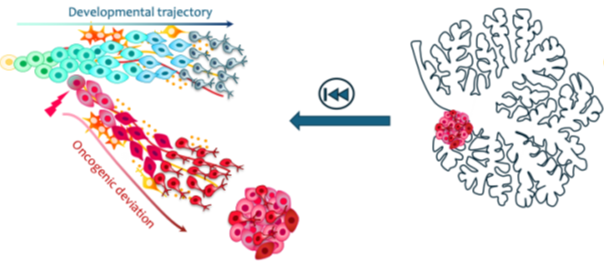
Group 3 medulloblastoma is a paediatric cerebellar cancer that arises from the oncogenic transformation of cerebellar neuronal progenitors during embryonic development. These progenitors deviate from their normal developmental trajectory. Our project aims to investigate the early mechanisms underlying tumour initiation and characterise this deviation through the development of a cross-species cell lineage atlas. We are also developing innovative models using transformed human cerebellar organoids implanted into chicken embryos to analyse how the microenvironment influences tumour initiation. The ultimate goal is to identify new therapeutic targets and assess treatment responses in order to propose improved strategies for intercepting the progression of this cancer.

Team 1: Celio Pouponnot (Institut Curie, Orsay)
Celio Pouponnot (CP), CNRS Research Director (DR1), leads a team within the “Genome, RNA and Cancer” unit at Institut Curie (UMR 3348 CNRS, U1368 INSERM, UPSaclay). His research focuses on paediatric brain tumours and their response to radiotherapy. His team has expertise in complex genetically engineered mouse models (GEMMs) with genetic lineage tracing and develops various medulloblastoma (MB) models: orthotopic transplantation of patient-derived xenografts (PDXs) into the mouse cerebellum, cultures of mouse cerebellar progenitor cells transduced with oncogene-encoding retroviruses, and electroporation of human iPSC-derived cerebellar organoids with plasmids encoding Group 3 (G3) MB oncogenes.
Team 2: Ludovic Telley (MeLiS Institute, Lyon)
Ludovic Telley (LT), INSERM Research Director (DR2), received an ERC Starting Grant in 2018 to establish his own laboratory as an assistant professor at the University of Lausanne. He pioneered the use of single-cell RNA sequencing (scRNA-seq) and developed the Flash-Tag technique during his postdoctoral research in the Jabaudon laboratory in Geneva. He joined the MeLiS research unit in Lyon in December 2024. His group focuses on understanding the molecular programmes that control cerebellar neuronal diversity, differentiation, interactions and the assembly processes required to form functional circuits supporting cerebellar functions.
Team 3: S. Tauszig-Delamasure (MeLiS Institute, Lyon)
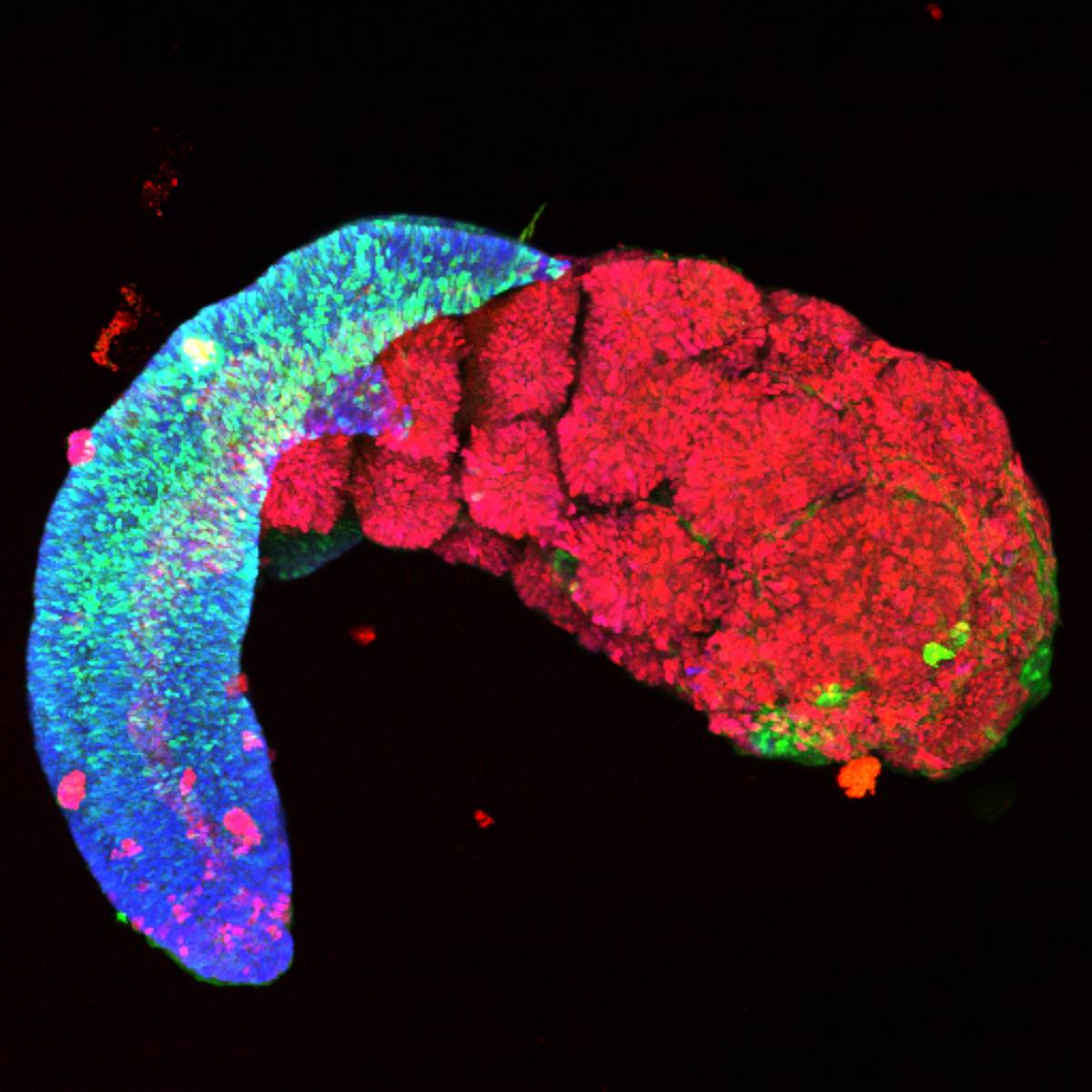
S. Tauszig-Delamasure (STD), CNRS Research Director (DR2), joined Valérie Castellani’s team (CNRS Research Director, DR1) at the MeLiS research unit in Lyon. This team pioneered the use of chicken embryo transplantation to study paediatric cancers as developmental diseases. STD launched an independent research programme on medulloblastoma, establishing a new avian model combining innovative imaging and transcriptomics to investigate the early stages of tumour formation and metastasis.
Key Objectives
- Map normal development and tumour-associated deviations: Establish a comparative atlas of the different cell lineages in the developing cerebellum, using multiple species and organoid models, to precisely identify how Group 3 (G3) medulloblastoma cells deviate from their normal developmental trajectories.
- Decipher the mechanisms of tumour initiation: Analyse how oncogenes and the embryonic microenvironment (intrinsic and extrinsic factors) work together to reprogramme these cell lineages and trigger tumour formation.
- Identify the causes of cell lineage instability: Determine and validate the molecular factors responsible for this “lineage infidelity” (the loss of cellular identity) in G3 tumours.
- Assess therapeutic responses and resistance: Investigate responses to radiotherapy and identify new therapeutic targets by analysing how cellular plasticity, changes in cell fate and clonal dynamics enable tumour progression or treatment resistance.
Methods and Approaches
To achieve its objectives, this project brings together a multidisciplinary approach combining diverse biological models and advanced technologies. The study will rely on a range of systems, from human iPSC-derived cerebellar organoids to mouse models (PDXs and orthotopic transplantation of transformed progenitor cells), as well as the innovative use of chicken embryos to model the influence of the microenvironment.
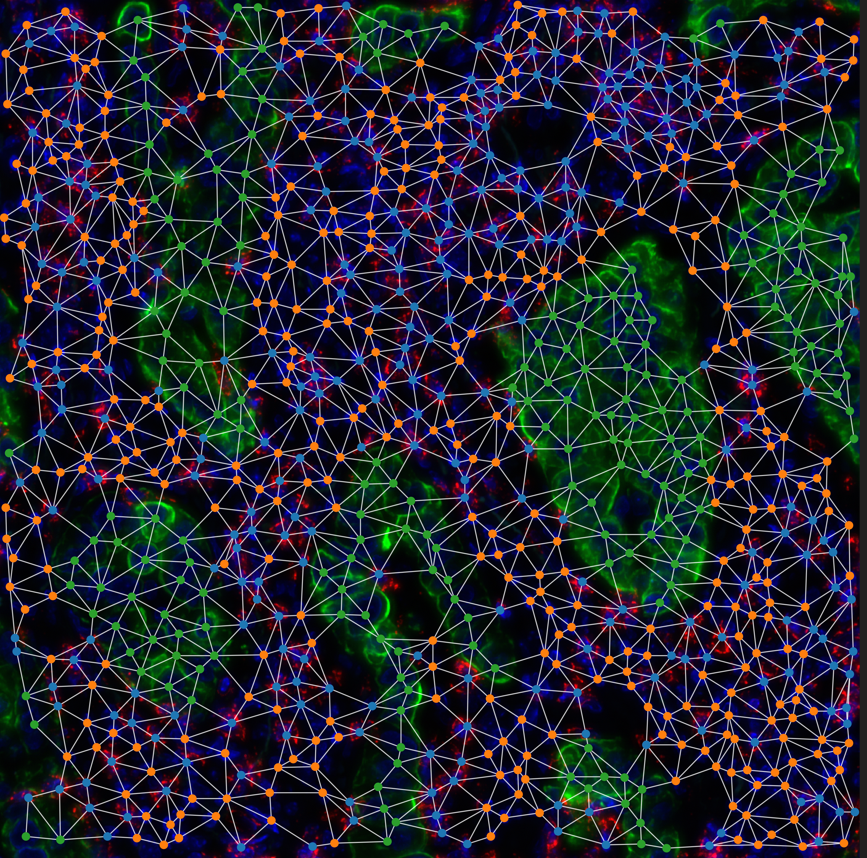
The project’s analytical strength lies in single-cell RNA sequencing (scRNA-seq), combined with the Flash-Tag spatiotemporal lineage-tracing technique and advanced bioinformatic analyses of cell–cell communication. In parallel, lipid nanoparticles and cellular barcoding techniques will be used to modify candidate genes and precisely track tumour clonal dynamics. Finally, the integration of radiotherapy response models will make it possible to assess the plasticity of tumour cell lineages and identify new therapeutic targets.
Expected results
This project aims to provide an integrated understanding of Group 3 medulloblastoma initiation. Expected outcomes include the creation of a multi-species reference atlas (human, mouse and chicken), also incorporating cerebellar organoids, to precisely define normal developmental trajectories and the molecular signatures of cerebellar neuronal progenitors.
By comparing the transcriptomes of transformed organoids, the project will identify the intrinsic and extrinsic factors through which oncogenes divert these progenitors from their normal developmental fate. This approach will make it possible to identify and functionally validate new therapeutic targets capable of restoring normal developmental programmes or preventing tumour progression in clinically relevant models (PDXs).
Finally, studying the response to radiotherapy will allow researchers to map the dynamics of resistant clones, uncover how this treatment alters cell fates and identify new molecular vulnerabilities. These findings could open up new therapeutic perspectives to prevent relapse and improve the management of paediatric cancers.
Les autres projets PEPR